- 1. Introduction
- 2. Creating Deliveries
- 3. LionWheel Delivery Management Guide
- 4. Plan Drivers Routes
- 5. Import an Excel file to LionWheel
- 6. Status Descriptions
- 7. Settings
- 8. Edit Geolocation
- 9. Flexible import: import from any Excel layout
- 10. Logging in and resetting a password
Flexible import: import from any Excel layout
How to import deliveries from any Excel file without the template: map the columns to fields, review the rows and create the deliveries.
Updated
On this page
With the flexible import you upload an Excel file as it is, in any layout: the columns can be in any order, and you don’t copy the data into the LionWheel template. LionWheel suggests a delivery field for each column, shows a preview, and lets you check and fix the rows before the deliveries are created. It remembers your mapping for next time.
Note: The flexible import is in beta. The regular import with the template keeps working as before (Excel import guide).
Opening the flexible import
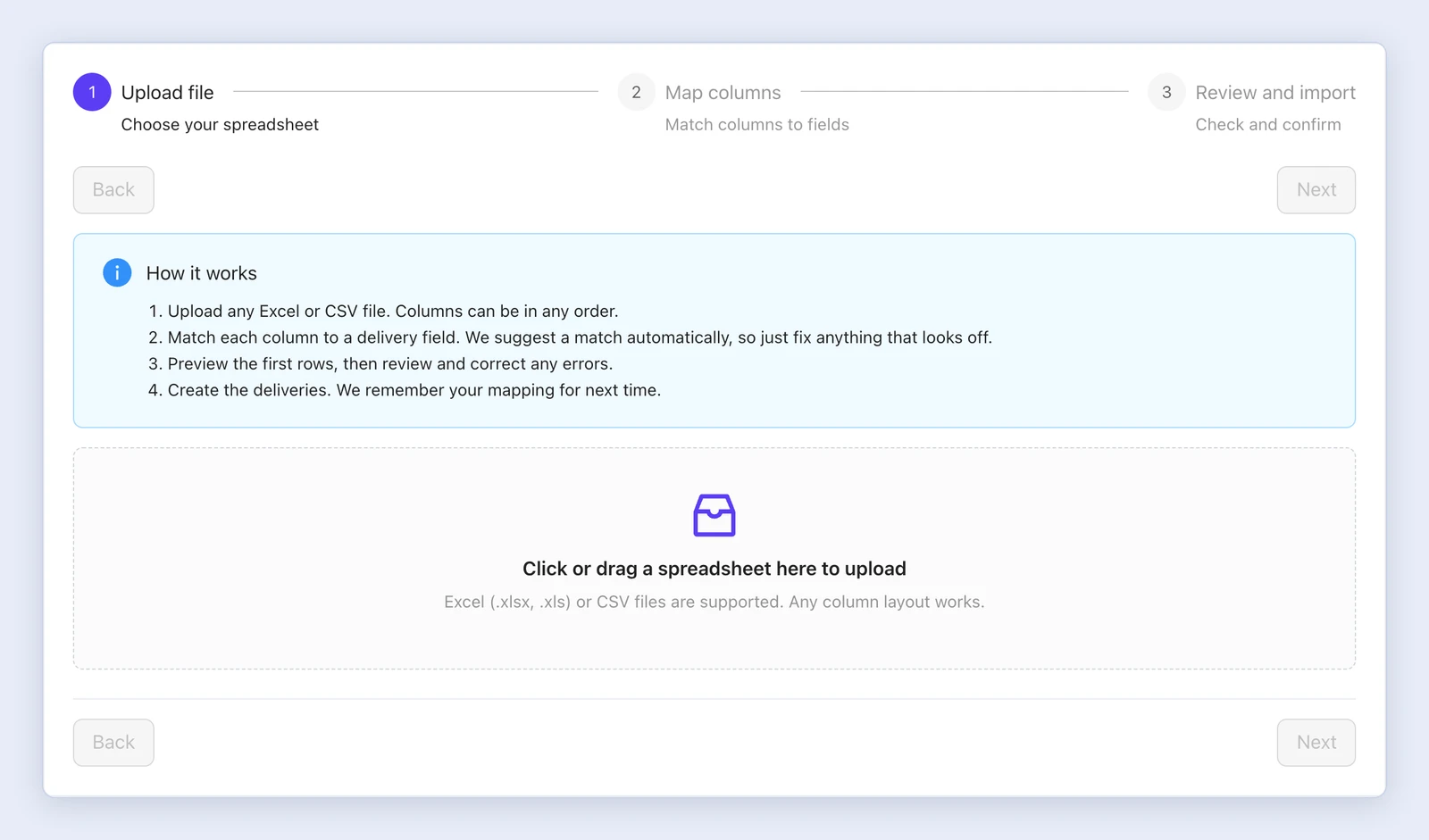
On the Import Deliveries page, click Try it now on the Flexible Excel import card. The import has three steps: Upload file, Map columns and Review and import. To go back to the import with the template, click Classic import.

Step 1: Upload file
Drag the file into the upload area, or click it to choose a file. You can upload an Excel file (.xlsx or .xls). Click Next.
Step 2: Map columns
LionWheel reads the file and suggests a delivery field in Map to field for each Spreadsheet column. Each suggestion shows how it was found: Matched by header, Similar header or Guessed from content.
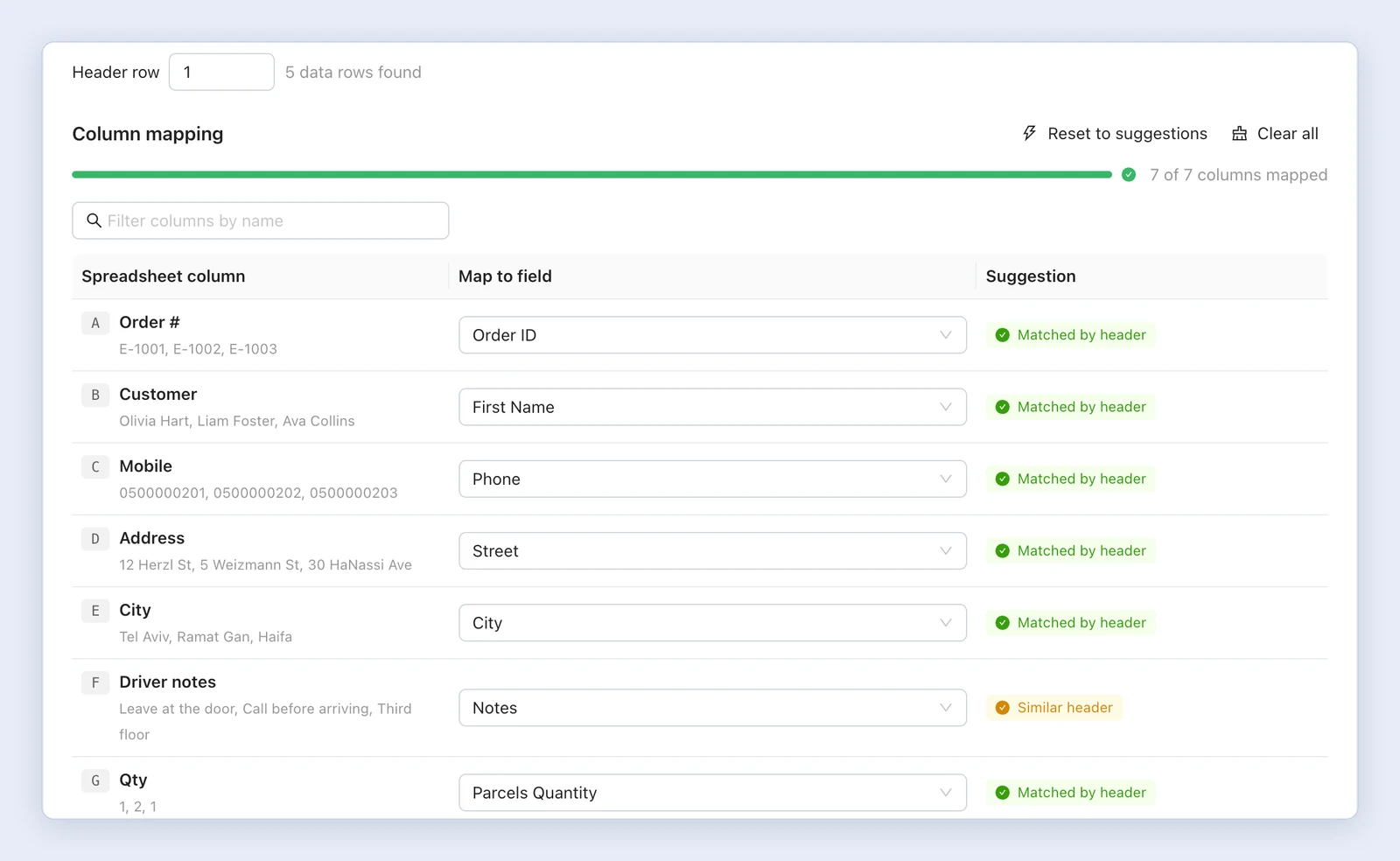
- In Header row, check that the number is the row holding your file’s column titles, and change it if needed.
- Go over the suggestions and change the field where needed. Leave a column you don’t need on Do not import. The list of fields also includes your account’s custom fields, if you have any.
- Preview shows the first rows as they will be imported. Check that the data landed in the right fields.
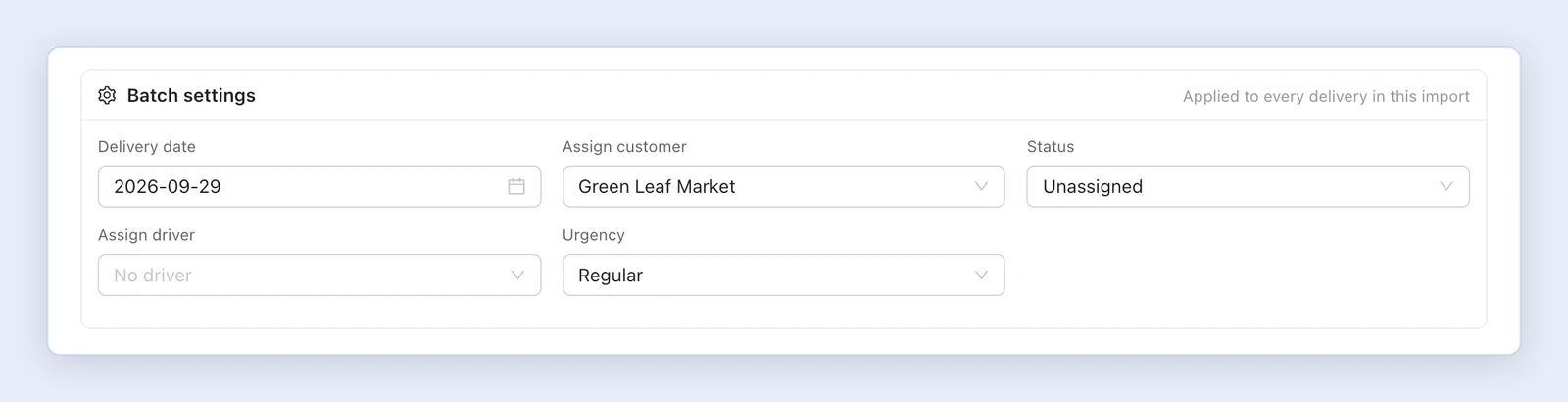
- In Batch settings, choose what applies to every delivery in the file: Delivery date and Status, and depending on your account, Assign customer, Assign driver, Urgency, Vehicle kind and Round trip.
- Click Continue to review.
To start over, click Reset to suggestions (back to LionWheel’s suggestions) or Clear all. In a file with many columns, find a column with Filter columns by name.
Your mapping is saved: after the deliveries are created, LionWheel saves the mapping. The next time you import a file with the same headers, even in a different column order, the mapping is pre-filled and you see “We pre-filled the mapping from your last import of this file layout.”
Step 3: Review and import
The top of the screen shows Total rows, Valid and With errors. If your account has required fields, they’re listed below. In the table, a field with an error is marked.
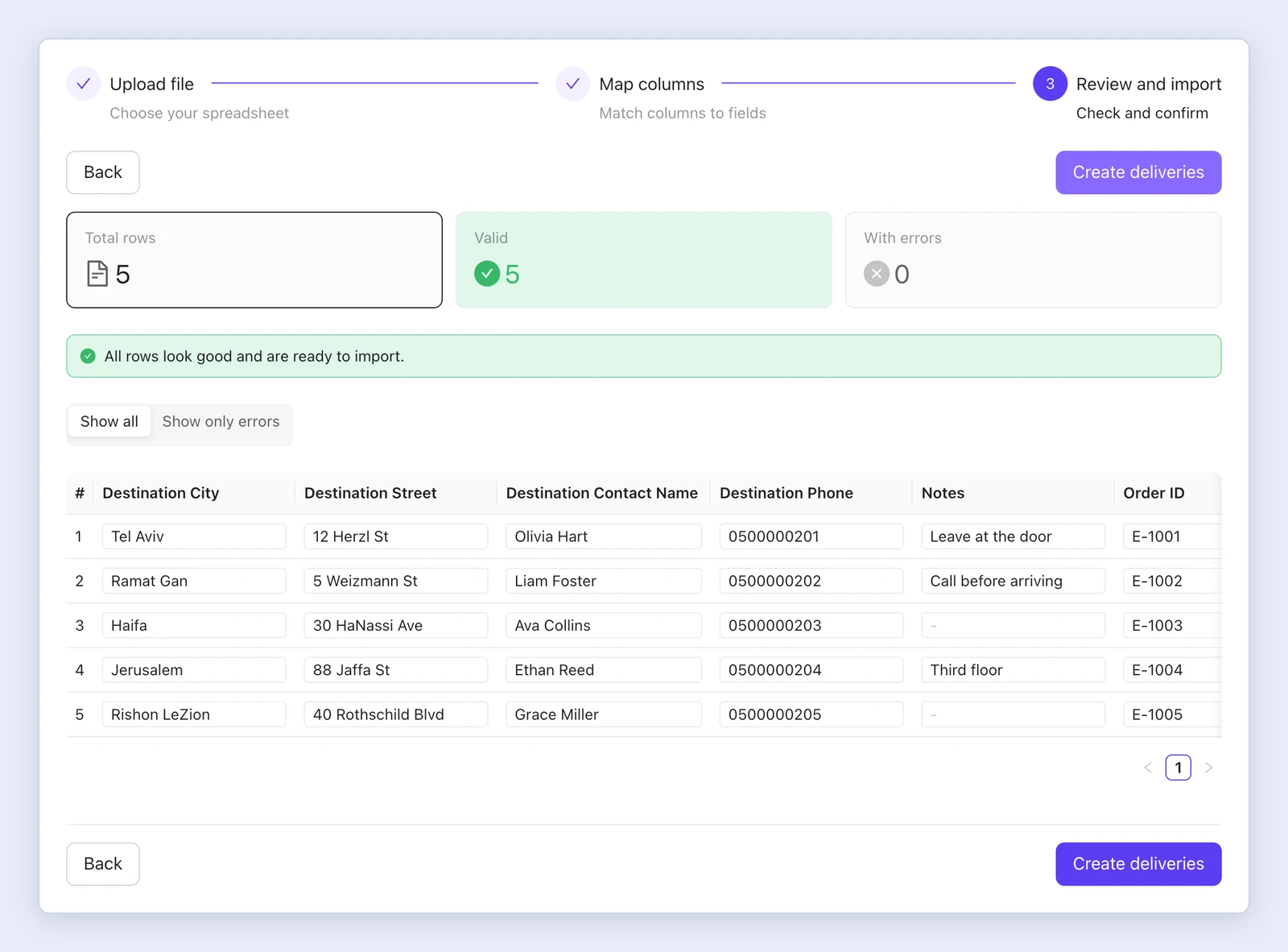
- Fix a value right in the table, and the row is checked again.
- Delete removes a row you don’t want to import.
- Show only errors shows just the rows that need fixing.
When everything is ready, click Create deliveries. If some rows still have errors, a window offers two options: Create valid only, or Don’t create to go back and fix them. While rows have errors, you can’t create all of them.
The deliveries are created in the background, and you return to the import page with a message saying how many deliveries are being imported.
Import history
Every flexible import appears in Import History, like any Excel import. On the Recent Imports card, the Source column shows Flexible for a flexible import and Regular for an import with the template.
Note: If an error appeared during the import, check Import History before uploading the file again. The deliveries may already have been created, and uploading again creates duplicates.
Business customers
If your business customers import deliveries in their portal, they get the flexible import too. When needed, they also choose the Source location, the place the deliveries leave from.